How Land Clearing Contractors Prepare Properties for Safe Development
Land clearing contractors transform undeveloped properties into construction-ready sites through careful planning, specialized equipment, and regulatory compliance. These professionals remove vegetation, grade terrain, and address environmental requirements to create stable foundations for residential and commercial projects.
Key Takeaways
- Site assessment identifies hazards, utilities, and environmental factors before clearing begins
- Vegetation removal and debris management create safe working conditions for construction teams
- Proper grading establishes stable foundations and manages water drainage
- Environmental compliance protects natural resources and prevents regulatory violations
- Safety protocols minimize risks to workers and surrounding properties
- Post-clearing preparation ensures sites meet construction requirements
Site Assessment and Planning
Land clearing contractors begin each project with a thorough site evaluation. This process examines existing conditions, identifies potential challenges, and determines appropriate clearing methods for the specific property.
Site surveys document property boundaries, existing structures, and topographical features. Professional surveyors use GPS technology and traditional surveying methods to establish accurate property lines. This prevents disputes and ensures that clearing activities remain within authorized areas.
Contractors locate underground utilities using specialized detection equipment. Gas lines, water mains, electrical cables, and telecommunications infrastructure require careful identification and protection during clearing operations. Many states require contractors to contact utility location services before beginning any excavation work.
Soil conditions affect both clearing methods and final grading requirements. Contractors examine soil composition, drainage characteristics, and load-bearing capacity through visual inspection and testing. Rocky soils may require specialized equipment, while clay soils need different drainage solutions than sandy conditions.
Environmental factors require careful consideration during planning:
- Vegetation assessment - Tree species, size, and health determine removal methods
- Soil analysis - Composition and stability affect grading requirements
- Drainage evaluation - Natural water flow patterns guide site grading
- Utility mapping - Underground lines require protection during clearing
- Wildlife considerations - Nesting seasons may restrict clearing activities
- Slope analysis - Steep terrain requires specialized equipment and techniques
Topographical analysis determines optimal clearing approaches for sloped terrain. Steep slopes require different equipment and techniques than flat areas. Contractors must consider access routes for heavy equipment and potential erosion issues during clearing operations.
Permit acquisition occurs before clearing begins. Local regulations govern tree removal, grading activities, and environmental protection. Tree ordinances may require permits for removing trees above certain size thresholds. Grading permits ensure proper drainage and erosion control measures. Environmental permits protect wetlands and sensitive habitats.
Vegetation Removal Methods
Tree and brush removal requires different approaches based on vegetation type, size, and site conditions. Professional contractors select appropriate methods to protect workers and surrounding property while meeting project timelines and budget requirements.
- Selective clearing preserves valuable trees while removing unwanted vegetation. This approach requires careful planning to protect root systems and prevent damage to remaining trees. Contractors mark trees for preservation using colored flagging tape or paint. Protection zones around preserved trees prevent soil compaction and root damage from heavy equipment.
- Clear-cutting removes all vegetation from designated areas. This method works well for large development sites where complete clearing is needed. Contractors use heavy equipment to efficiently remove trees and brush across extensive areas. Clear-cutting typically costs less than selective clearing but provides fewer options for preserving existing vegetation.
- Directional felling controls tree fall direction to prevent damage to structures, vehicles, or other trees. Experienced operators make precise cuts that guide falling trees away from valuable features. This technique requires skill and experience to execute safely, particularly with large trees or confined spaces.
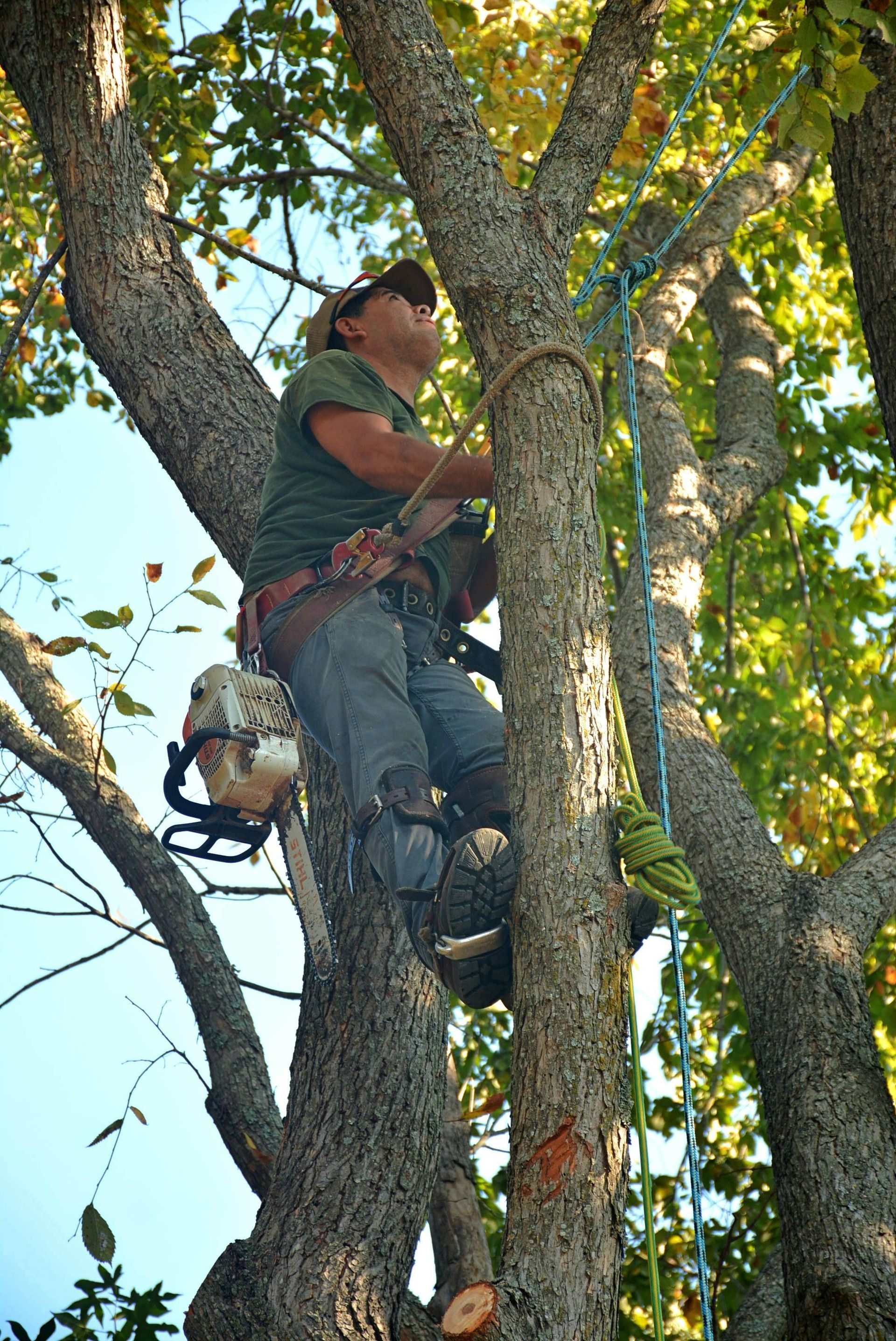
A commercial tree company handles specialized removal tasks requiring technical expertise. Large trees near structures need controlled removal using cranes or sectional dismantling. These operations require certified arborists and specialized rigging equipment to safely lower tree sections without property damage.
Tree services list typically includes:
- Crane-assisted removal - For trees near buildings or power lines
- Sectional dismantling - Piece-by-piece removal in confined areas
- Rigging operations - Controlled lowering of large tree sections
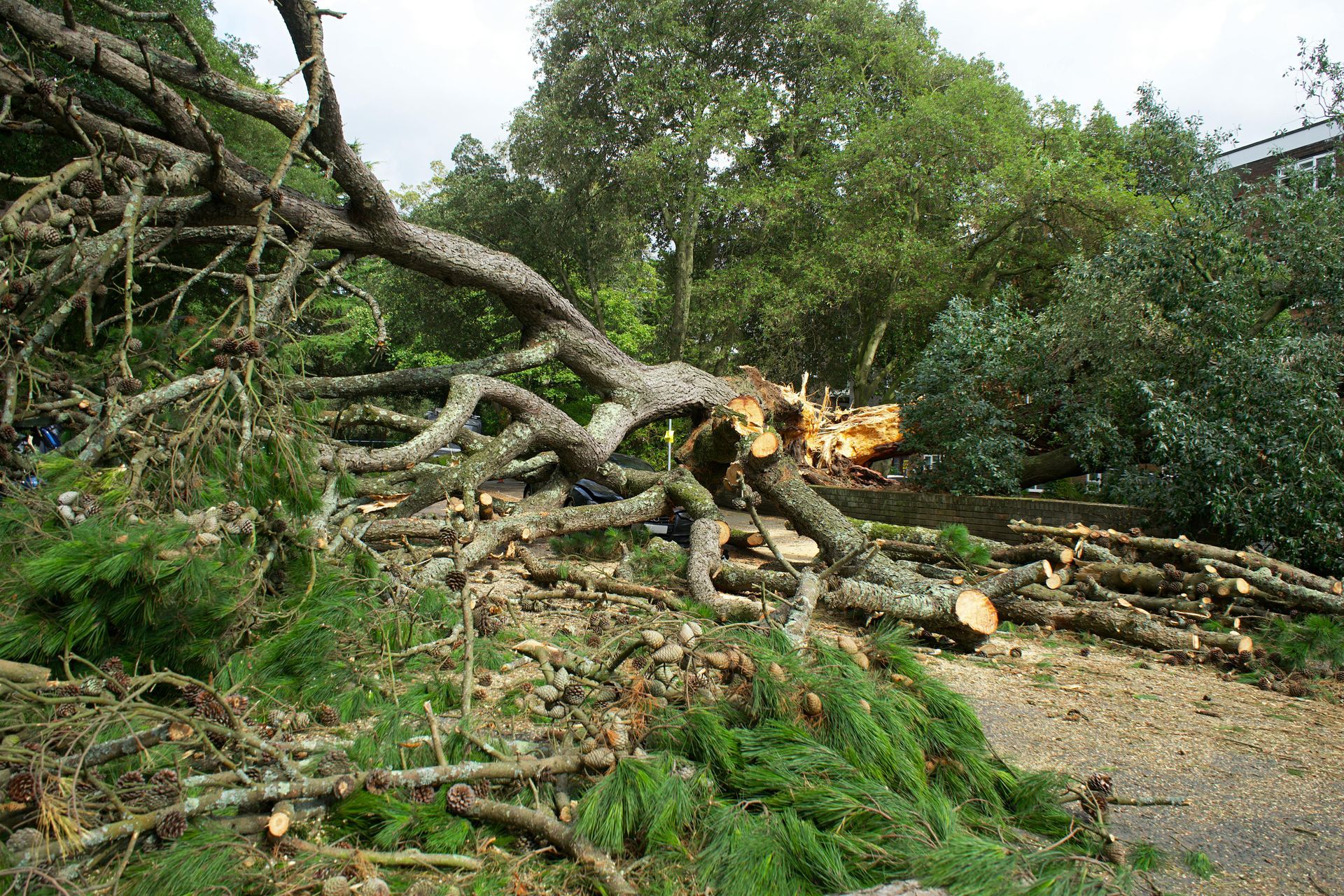
- Emergency removal - Storm-damaged or hazardous tree elimination
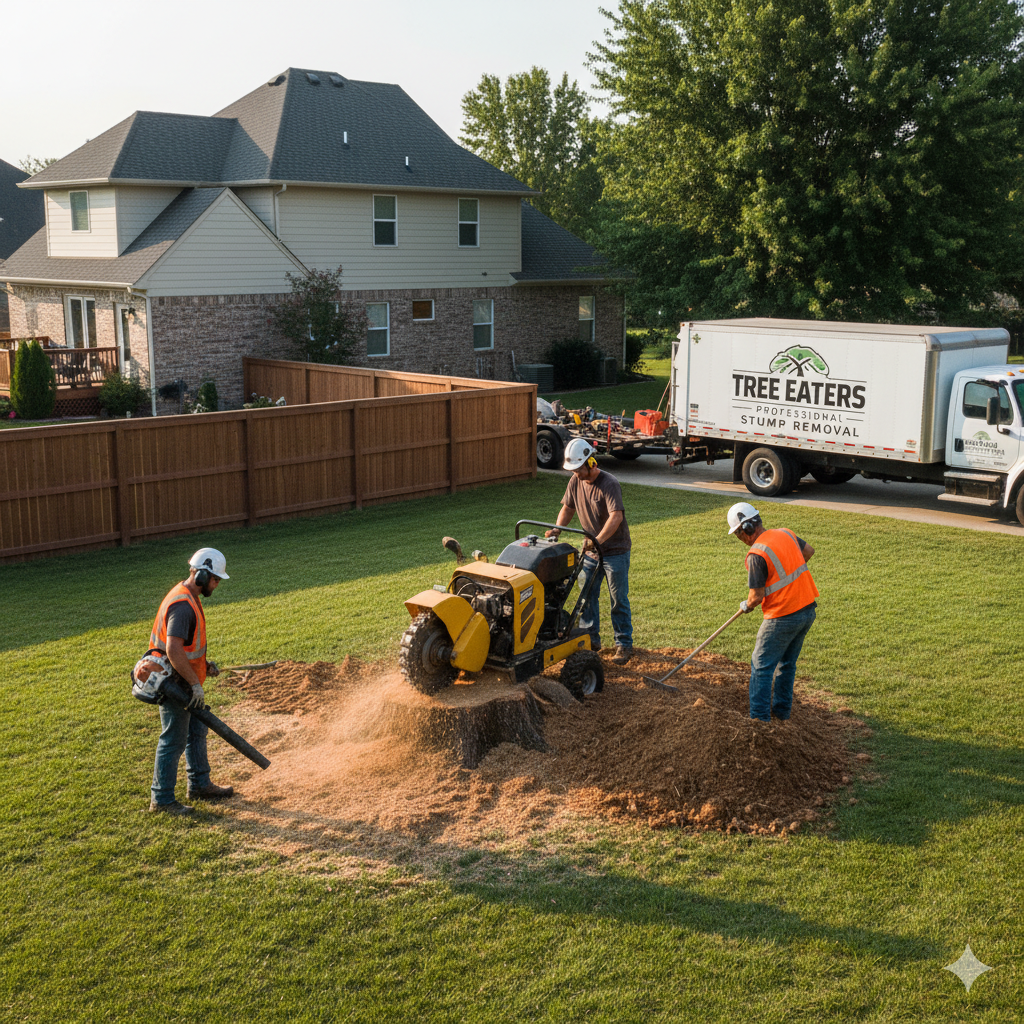
- Stump grinding - Complete removal of root systems
- Debris chipping - On-site processing of branches and logs
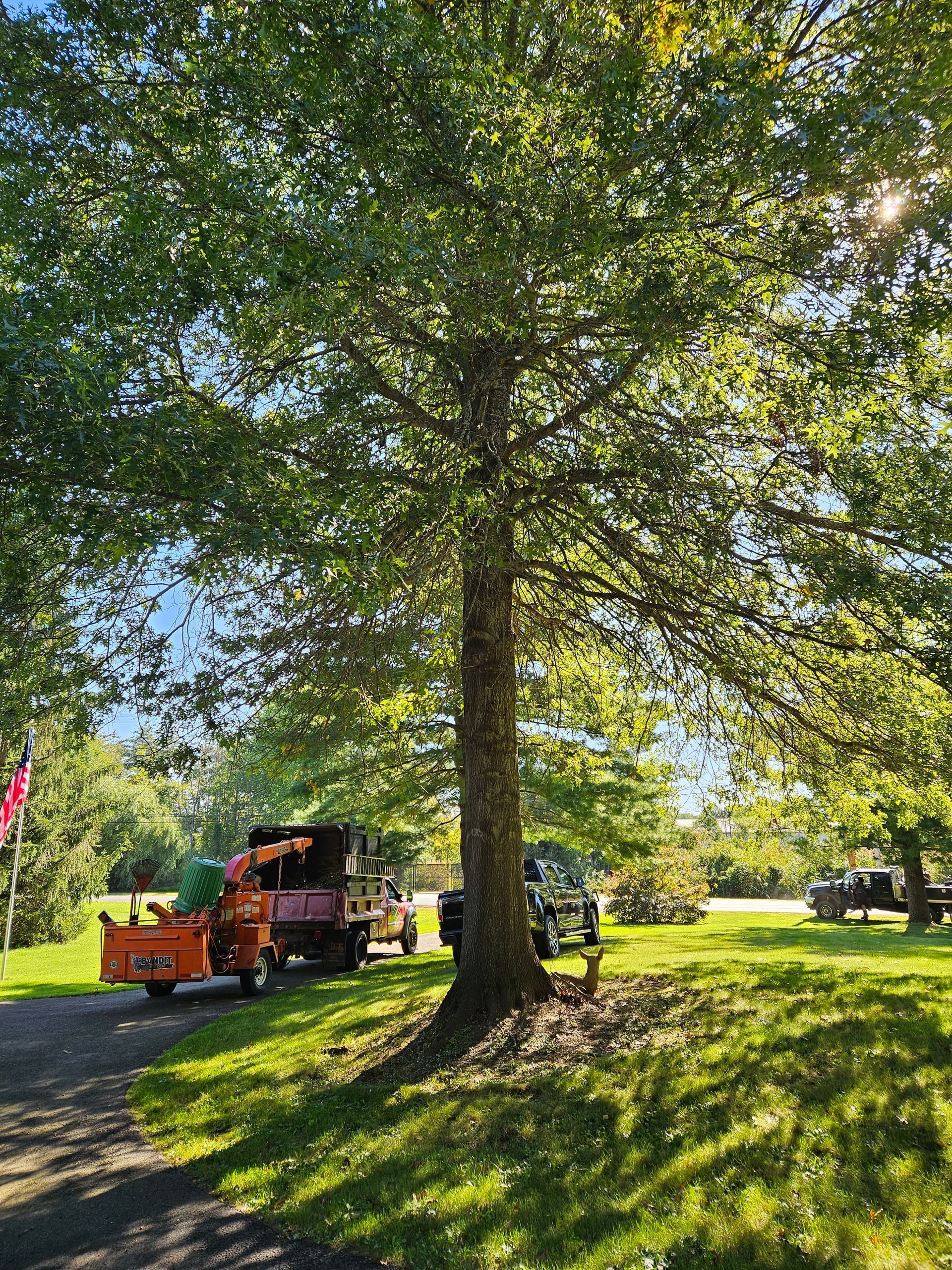
Brush chipping service near me processes smaller vegetation on-site. Mobile chippers convert branches and brush into wood chips, reducing disposal costs and transportation requirements. These machines can handle material up to 12 inches in diameter, processing debris quickly and efficiently.
Forestry mulching combines cutting and mulching in one operation. Track-mounted mulchers can clear dense brush and small trees while leaving beneficial mulch on the ground. This technique works well for fire prevention, invasive species control, and habitat management projects.
Stump removal completes the clearing process. Grinding machines reduce stumps below ground level, allowing for proper grading and construction. Complete stump extraction may be necessary for areas requiring deep excavation or where underground utilities will be installed.
Equipment and Safety Requirements
Commercial land clearing requires specialized heavy equipment operated by trained professionals. Equipment selection depends on project size, terrain conditions, and vegetation density.
| Equipment Type | Primary Use | Terrain Suitability |
|---|---|---|
| Bulldozers | Large-scale clearing and rough grading | Flat to moderate slopes |
| Excavators | Precision removal and debris handling | All terrain types |
| Forestry mulchers | Brush clearing with minimal soil disturbance | Steep slopes and sensitive areas |
| Skid steers | Material handling and fine grading | Confined spaces |
| Stump grinders | Root system removal | All terrain types |
Safety protocols protect workers and property during clearing operations. Contractors implement comprehensive safety programs, including:
- Personal protective equipment - Hard hats, safety glasses, and cut-resistant clothing
- Equipment maintenance - Regular inspections and proper mechanical condition
- Hazard identification - Recognition of overhead lines, unstable trees, and terrain risks
- Emergency procedures - First aid training and emergency contact protocols
- Site security - Barriers to prevent unauthorized access during operations
Workers receive training on proper equipment operation and safety procedures. Regular safety meetings address site-specific hazards and reinforce safe working practices throughout the project.
Land Clearing and Grading
Grading operations create proper site elevations and drainage patterns after vegetation removal. Professional contractors understand how grading affects long-term structural stability and stormwater management. Proper grading prevents water accumulation around foundations and directs runoff to appropriate collection areas.
Rough grading establishes basic site contours and removes unsuitable soil materials. This phase creates preliminary slopes that direct water away from building areas toward designated drainage locations. Contractors may import fill material or export excess soil to achieve proper elevations specified in construction documents.
Soil compaction occurs in layers during the grading process. Each lift of soil must be compacted to specified density levels before placing additional material. Contractors use vibratory rollers, plate compactors, or pneumatic tire rollers depending on soil type and compaction requirements.
Fine grading achieves precise elevations specified in construction documents. This detailed work ensures that building foundations, driveways, and utilities align with design requirements. Laser-guided equipment provides the accuracy needed for proper drainage and structural alignment. Grade tolerances typically range from 0.1 to 0.5 feet, depending on the specific application.
Commercial land clearing projects often require extensive grading to accommodate large buildings, parking areas, and stormwater management facilities. These projects may involve moving thousands of cubic yards of soil and require careful coordination with structural and civil engineers.
Drainage considerations include:
- Surface grading - Slopes that direct water away from structures (minimum 2% grade)
- Swale installation - Channels that collect and convey stormwater to detention areas
- Detention areas - Temporary storage for stormwater management during heavy rainfall
- Erosion control - Measures that prevent soil loss during construction activities
Sub-grade preparation creates stable foundation conditions. Contractors remove organic materials, soft soils, and other unsuitable materials from foundation areas. Geotextile fabric may be installed to separate different soil types and improve load distribution.
Compaction testing verifies soil density meets engineering requirements. Nuclear density gauges or sand cone tests measure in-place density compared to laboratory maximum density values. Proper compaction prevents settling that could damage foundations or infrastructure. Most specifications require 95% of maximum density for structural areas.
Slope stabilization prevents erosion on graded surfaces steeper than 3:1. Contractors may install erosion control blankets, hydroseeding, or retaining structures to maintain slope stability. Temporary measures protect exposed soils until permanent landscaping can be established.
Environmental Compliance
Environmental regulations govern land clearing activities to protect natural resources and water quality. Contractors must understand and comply with local, state, and federal requirements.
Tree protection ordinances may restrict the removal of certain species or sizes. Some communities require permits for removing trees above specific diameter thresholds. Heritage or specimen trees often receive special protection requiring alternative development approaches.
Erosion and sediment control prevent soil loss during and after clearing. Contractors install:
- Silt fencing - Barriers that filter runoff and capture sediment
- Sediment basins - Temporary ponds that settle particles from stormwater
- Erosion blankets - Protective coverings for exposed soil surfaces
- Temporary seeding - Quick-growing vegetation that stabilizes soil
Wetland protection requirements apply to areas near streams, ponds, or designated wetlands. Federal and state agencies regulate disturbance within these sensitive areas. Contractors may need environmental consultants to navigate complex wetland regulations.
Stormwater permits govern runoff from construction sites. These permits specify erosion control measures, monitoring requirements, and maintenance procedures. Violations can result in significant fines and project delays.
Post-Clearing Site Preparation
Site preparation after clearing ensures optimal conditions for construction activities. Contractors address remaining issues and prepare the site for subsequent construction phases.
Access road construction provides stable routes for construction vehicles and equipment. These temporary or permanent roads must support heavy loads while minimizing damage to finished site areas. Proper base preparation and drainage prevent rutting and settlement.
Utility preparation involves:
- Marking existing utilities - Protecting infrastructure during construction
- Preparing corridors - Clearing paths for new utility installation
- Coordinating access - Scheduling utility work with other construction activities
- Restoration planning - Protecting disturbed areas after utility installation
Quality control inspections verify completed work meets specifications and regulatory requirements. Contractors document compliance with environmental permits and construction standards before releasing sites to construction teams.
Site stabilization protects cleared areas until construction begins. Temporary measures may include seeding, mulching, or covering to prevent erosion. These measures maintain site integrity during weather events and construction delays.
Frequently Asked Questions
How long does land clearing take for a typical residential lot?
Most residential clearing projects require 3-7 days, depending on lot size and vegetation density. Complex sites with environmental restrictions may need additional time.
What permits are needed for land clearing?
Requirements vary by location but often include tree removal permits, grading permits, and erosion control plans. Contractors typically handle permit applications.
Can contractors work around the trees I want to keep?
Yes, experienced contractors can preserve selected trees through careful planning and specialized techniques. This may require modified clearing methods and protection measures.
How is soil erosion prevented during clearing?
Contractors install erosion control barriers, use proper grading techniques, and implement temporary stabilization measures. Weather conditions may affect the timing of certain activities.
What happens to cleared trees and brush?
Materials are typically recycled through chipping, mulching, or proper disposal. Some contractors convert debris into useful products like landscape mulch.
Final Thoughts
Professional land clearing contractors prepare properties for safe development through systematic assessment, proper equipment use, and regulatory compliance. Their expertise in vegetation removal, grading, and environmental protection creates stable foundations for successful construction projects while minimizing risks and delays.
Ready to prepare your property for development? Contact experienced land clearing contractors today for a professional site assessment and project quote.
Reference:
https://www.sciencedirect.com/topics/agricultural-and-biological-sciences/soil-compaction
Share this article